Where All Stories Begin
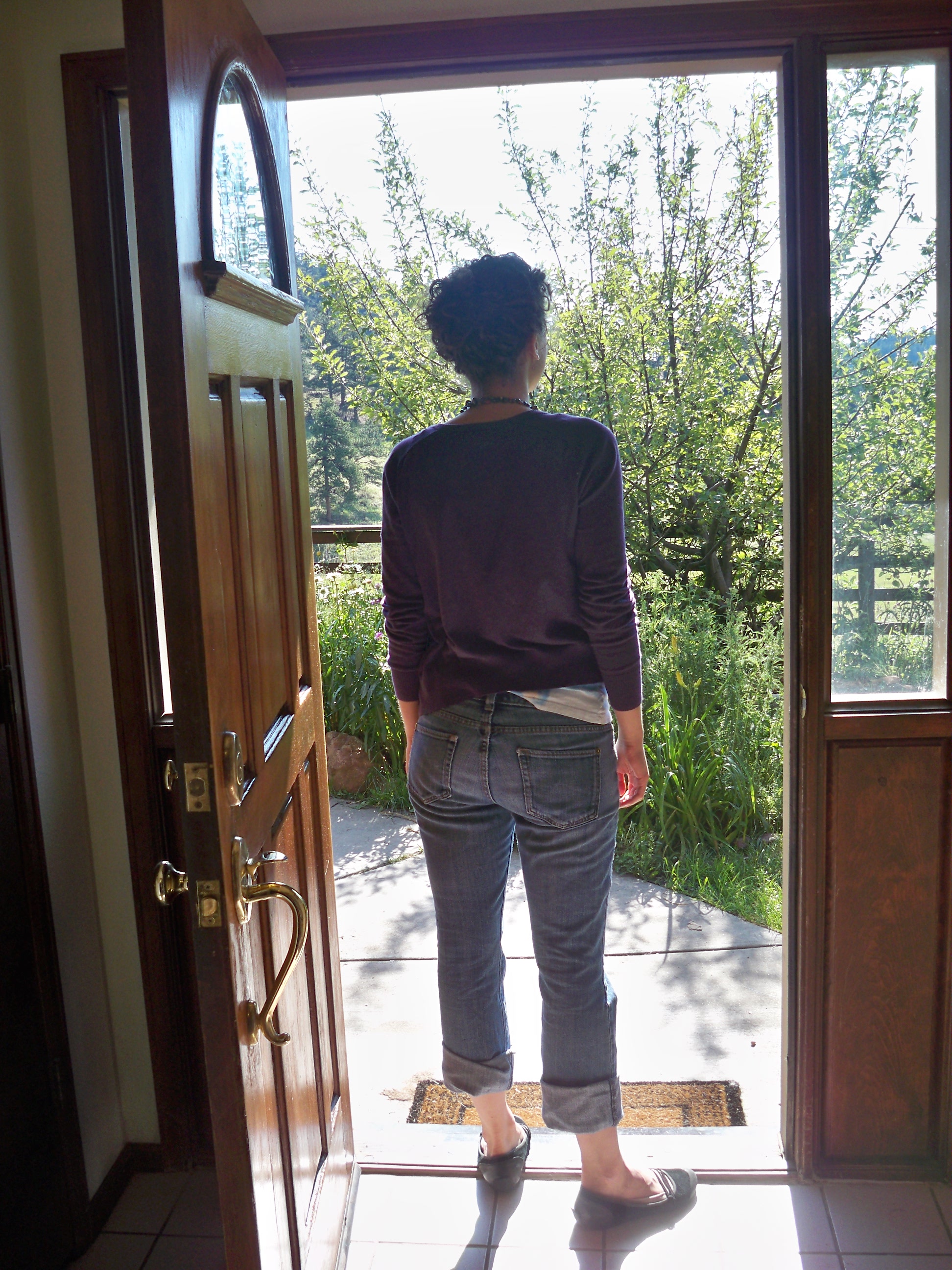
A story is an open door just waiting for me to enter.
Defining moments can happen anywhere. Even a dorm bathroom.
During an evening study break, I was chatting with a hallmate about life goals. (Grove City College students like to ponder the larger questions of life at 11 p.m.) Under the glow of the fluorescent lights, I explained that I no longer wanted to be an editor, and I certainly didn’t want to write The Great American Novel. But I enjoyed journalism, which provided an opportunity to ask questions, to hear stories, and to capture them in writing.
And then somewhere between the shower curtain and the mirror, I had this realization.
I want to help people tell their stories.
I ruminated over this bathroom epiphany for the rest of the year and into the summer. When I started an internship at a homeless rescue mission, I met a wide variety of people: new residents whose eyes were clearing after several weeks of sobriety, program alumni with 10 years of clean time from alcohol and drugs, and co-workers with recovery backgrounds. I overheard fragments of their lives, whether an off-handed comment in the dining hall or a conversation in the hazy smoke of the side porch. The comments tantalized me like the waft of baking brownies. They hinted at deeper stories, and I was dying to hear them.
I had the opportunity to interview several staff members and program alumni with recovery backgrounds. What gut-wrenching yet incredible stories! (I’ll share them with you one day.) Not only was it an extraordinary privilege to hear their life histories, the experience also solidified my beliefs about the importance of storytelling.
Have you ever noticed that we content ourselves with bits and pieces of people’s stories? But what if you never hear the whole thing? Imagine what a loss that would be for you and for them. Stories have power, and people need to share them; God wired us that way. People need the opportunity to put the jumble of stories, memories, and impressions into a coherent form. In recovery, talking is cathartic, because it allows people to give vent to old anger, to relive old highs, and to remember the dark times as they look from the other side.
Now when I say “story”, I don’t mean something with a beginning, middle, and end. I once thought that life stories could be summed up as, “I went through X, Y, and Z and here I am today.” But it doesn’t work that way. Life is dynamic, not static, and we can’t mark out progression on a growth chart. Only in retrospect can we see how far we have come.
Our stories have power, but if they never are shared, an incredible opportunity is lost. It’s like having a Monet in your bedroom that nobody finds until you’re dead—if they find it at all. Stories are treasures: when someone shares their story, I am honored with the telling. I walk out of the room feeling rich, like I’ve gained another pair of eyes to see the world. I want to be a cistern of story, who can refresh others with stories that were poured into me.
I love to sit down and ask questions until people reach the tipping point. Then the story spills out. Things emerge dusty corners and skeletons fall out of the closet, gaining flesh and becoming breathing examples of Christ’s transformation.
It’s like looking at a mesh of threads: messy, chaotic, vibrant. Through the center runs a strong, winding fiber that is the path God intended.
So I practice by telling my own stories, to sharpen my skills so that I may more effectively share others’—not merely to recount events or describe scenery, but to share truth. And I love to soak up the words of others, that their stories might shape my own.